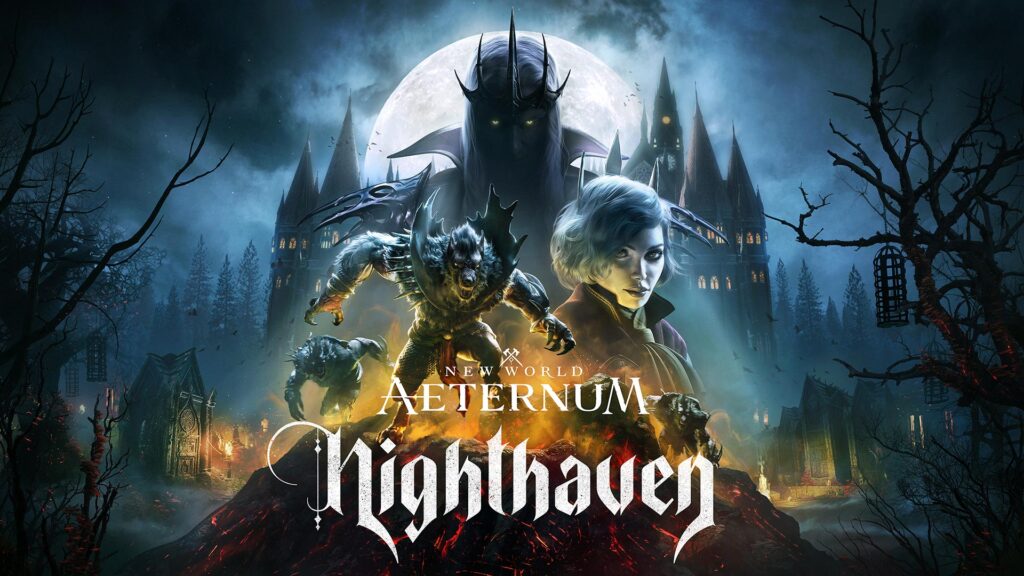
New World is an open-world action MMO developed by Amazon Games, set on the supernatural island of Aeternum. Blending large-scale PvE and PvP combat with deep crafting, territory control, and live seasonal content, it delivers a player-driven experience centered on exploration, progression, and dynamic world systems. I was a systems designer and content designer on New World: Aeternum and its later expansion New World: Nighthaven. My primary responsibilities while working on New World were creating new items for rewards, updating seasonal event rewards, designing the seasonal reward track, managing implementation of MTX cosmetics, and designing key portions of the progression overhaul and new reward systems that came with the Nighthaven expansion.
Seasonal Content
During my time at new world, one of my primary responsibilities was owning the design of several pieces of seasonal content, including the season reward track, the seasonal journeys, and the rewards for several seasonal events, both recurring events and new seasonal content. Starting with New World: Aeternum, I took ownership of the seasonal pass structure and rewards, updating the season pass to follow a new template that offered clear value to both free players and premium pass purchasers. I redesigned the layout and reward cadence so that each new season could be built more quickly and consistently, reducing the design time needed per pass and making it easier for secondary teams to take over implementation in the future. This work sat at the intersection of content design, monetization, and pipeline efficiency, ensuring that seasonal passes were both attractive to players and feasible to deliver on a regular cadence.
After each season, I implemented targeted improvements to the pass based on player feedback, internal review, and live data, deprecating older or underperforming rewards and updating reward boxes to provide better perceived and actual value. I also designed each season journey to reinforce the themes and content of its respective season—creating missions that pushed players toward new and refreshed content, were challenging but not tedious to complete, and naturally encouraged exploration of features the team wanted to spotlight. In parallel, I updated recurring seasonal events like Turkey Terror and Summer Medleyfaire each year so they kept pace with the game’s expanding gear power levels, adding new reward hooks that both enticed returning veterans and helped newer or returning players catch up to the rest of the community.
Throughout this work, I had to adapt to shifting cosmetic budgets and leadership priorities within the MTX pipeline, adjusting the premium pass rewards and other vectors so that overall value remained consistent even when fewer cosmetics were available. Balancing business constraints with player expectations was a constant part of the role, and the cumulative effect of these changes contributed to higher player satisfaction with seasonal rewards and improved reactivation and retention from season to season.
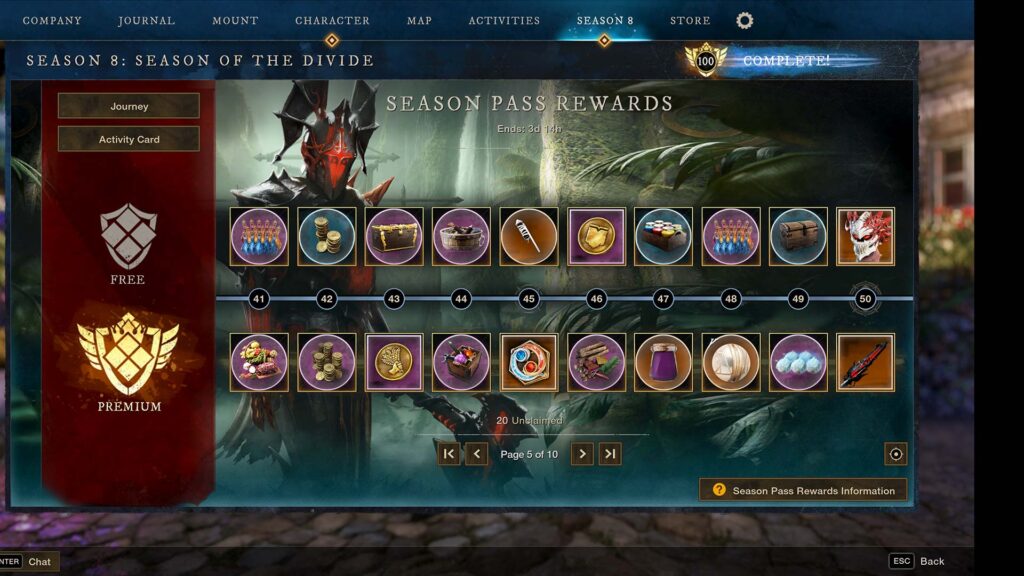
Each season combined a rewards pass—granting resources, premium currency, and cosmetics—with a seasonal journey, a mission track that encouraged players to engage with both new and legacy systems for meaningful rewards and extra pass progress. I owned the design of both, creating the shared template used across seasons and then layering in bespoke goals and rewards to fit the theme and feature set of each individual season.
MTX Cosmetics Content Design
Following a major team reorganization, I stepped into the role of chief cosmetics content designer, taking ownership of the MTX pipeline at a time when many cosmetics tasks were in limbo or at unclear stages of development. One of my first priorities was to bring order back to the process: I organized communication channels, clarified ownership, and established a reliable flow for cosmetic work from concept through implementation. This ensured that art, narrative, design, and production all had visibility into what was needed, by when, and in what state.
To support both quality and speed, I developed tools and processes to dramatically accelerate cosmetic implementation. Previously, getting a cosmetic into the game could take hours of manual setup and handoffs. I broke this work down, identified which pieces could be delegated or parallelized (such as narrative text and icon creation), and designed ways for multiple disciplines to contribute at the same time instead of waiting on one another in a strict sequence. These changes reduced implementation time from hours to minutes and allowed the team to hit seasonal deadlines more consistently while still maintaining a high quality bar.
As the MTX pipeline stabilized and production demands grew, I trained and led a team of contracted designers, delegating implementation tasks and reviewing their work to ensure cosmetic sets met both design and presentation standards. This leadership role let me keep the pipeline flowing smoothly while also freeing up time to contribute to other systems and progression work. I also managed the MTX store backend, handling the final implementation of cosmetics into the live store in preparation for each season and content drop—configuring offers, bundles, and timings so that finished items were properly surfaced to players when new updates went live.
Overall, my work on MTX content design combined hands-on cosmetic implementation, pipeline and tool building, and team leadership to keep New World’s cosmetic offerings consistent, efficient to ship, and aligned with both player expectations and business needs.
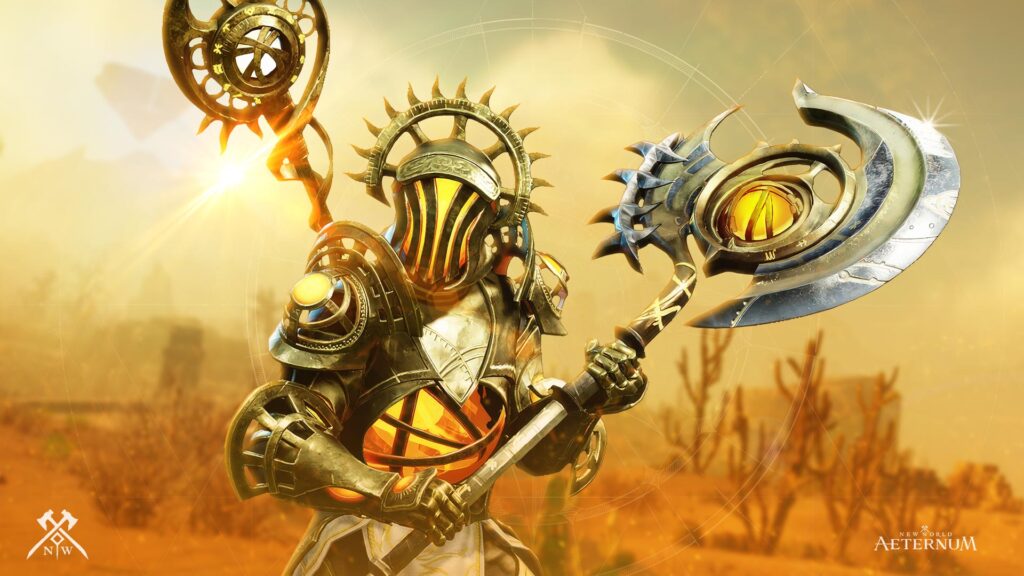
Each season came with a set of cosmetics drip-fed over its duration. I handled their in-game implementation and narrative framing, while also managing the pipeline and unblocking tasks across disciplines. Later, I trained external designers to use tools I built to streamline and error-proof our cosmetic implementation, freeing me up to supervise the MTX pipeline as a whole alongside my other systems and content responsibilities.
Rewards and Progression Systems
I designed reward items and reward structures for multiple seasonal events and new features, ensuring each one offered desirable gear and valuable resources proportional to the effort invested, without eclipsing rewards from higher-end content or cannibalizing existing systems. This often meant tuning drop rates, item tiers, and reward boxes so they felt generous and exciting while still fitting cleanly into the broader economy and progression landscape.
Because live games are messy, I frequently had to design and deliver targeted reward solutions on tight timelines—especially when addressing emergent issues or compensating players after developer-caused bugs. Working within limited reward and item-appearance bandwidth, I collaborated closely with teams monitoring player sentiment and customer support to craft compensation packages that felt fair, respected players’ time, and helped rebuild trust without destabilizing progression.
Starting with Nighthaven, I was given the reins on several key progression systems as part of the expansion’s overhaul. This included designing the new leveling curve from 65–70, making sure players naturally hit appropriate levels as quest difficulty ramped up and they approached the end of the MSQ. I also defined open-world drops under the new gear paradigm and used MSQ rewards (which I also designed) to guide players into the new slottable perk system, teaching its value through carefully paced, hands-on rewards rather than pure explanation.
I also designed the reward structure for the Catacombs game mode, balancing short-term satisfaction with long-term engagement. The goal was to give players strong reasons to engage deeply with the new mode and its unique spaces, while ensuring rewards took long enough to chase that they supported ongoing play without tipping into grind or trivializing other content. As part of that work, I separated certain currencies and reward flows to guard against botted or automated play, protecting the integrity of the mode and the broader economy.
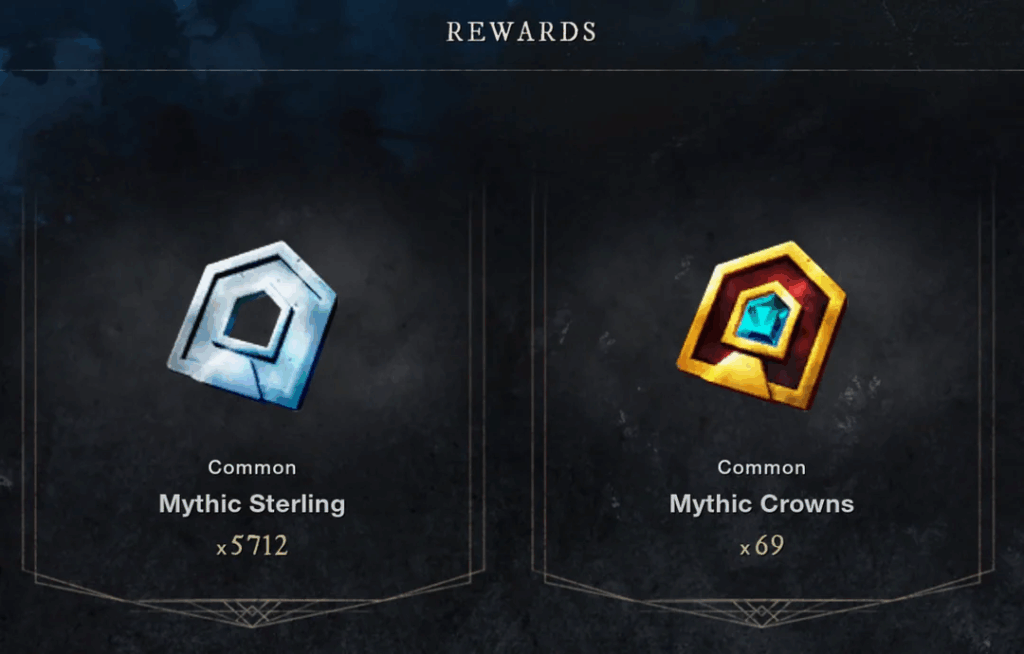
These are the Mythic Sterling and Mythic Crowns rewards from Catacombs, the endgame activity whose reward structure I designed. I set Catacombs shop prices based on expected currency earn rates estimated by the modes team, aiming for each run to feel meaningfully rewarding while still supporting long-term progression. By balancing their earn rates against other endgame sources, I made these currencies desirable without overshadowing other new gear rewards in the progression overhaul, and separated their acquisition and sinks to reduce botting risk and keep the wider economy stable.